Rational iteration
Each step squares z, then divides by z + c. The numerator is zero at z = 0; the denominator is zero at z = −c, which makes that point a pole. The map has degree two: (z²)/(z + c) is degree‑2 over degree‑1, and after cancelling a common factor it has one zero and one pole, each counted with multiplicity.
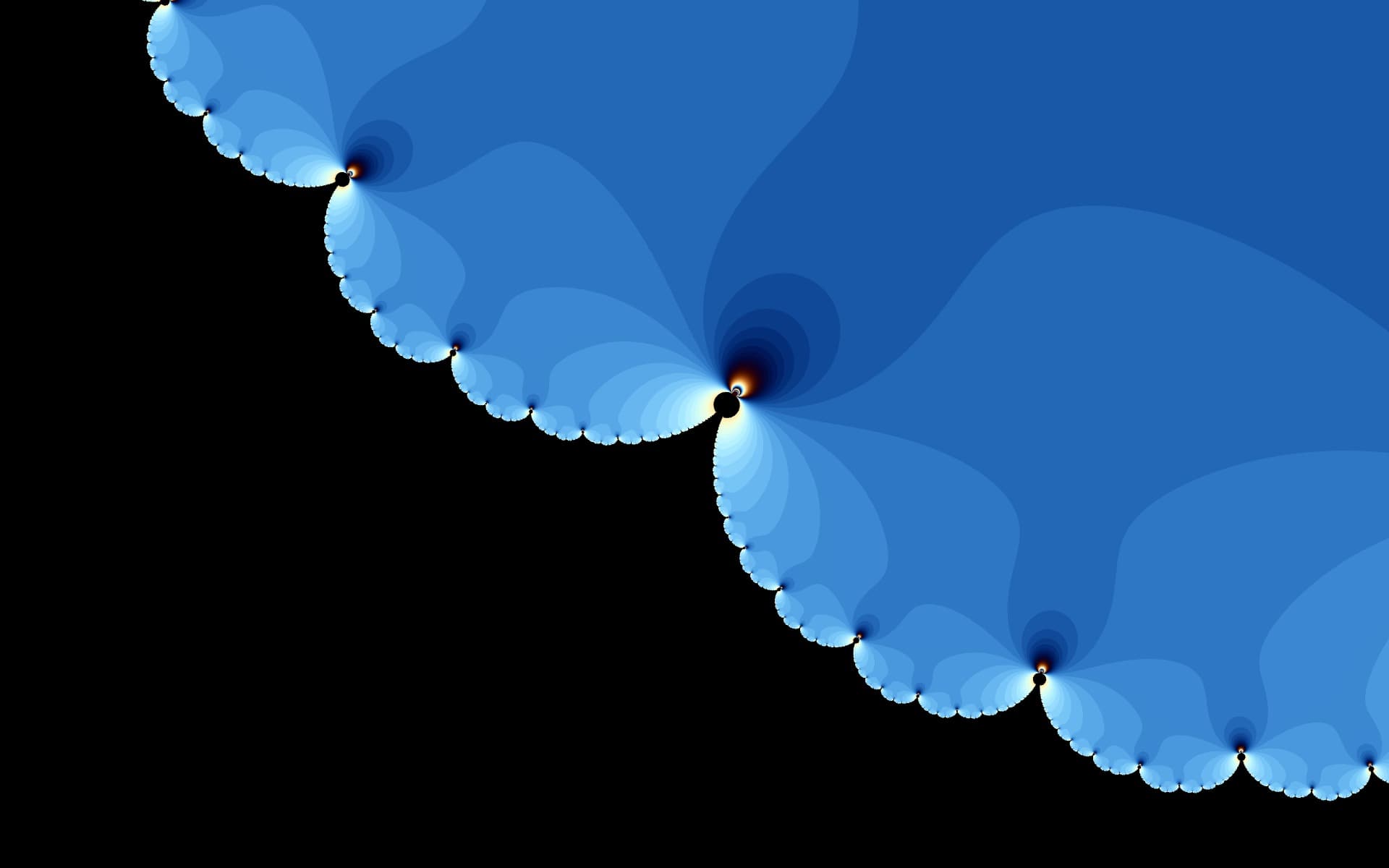
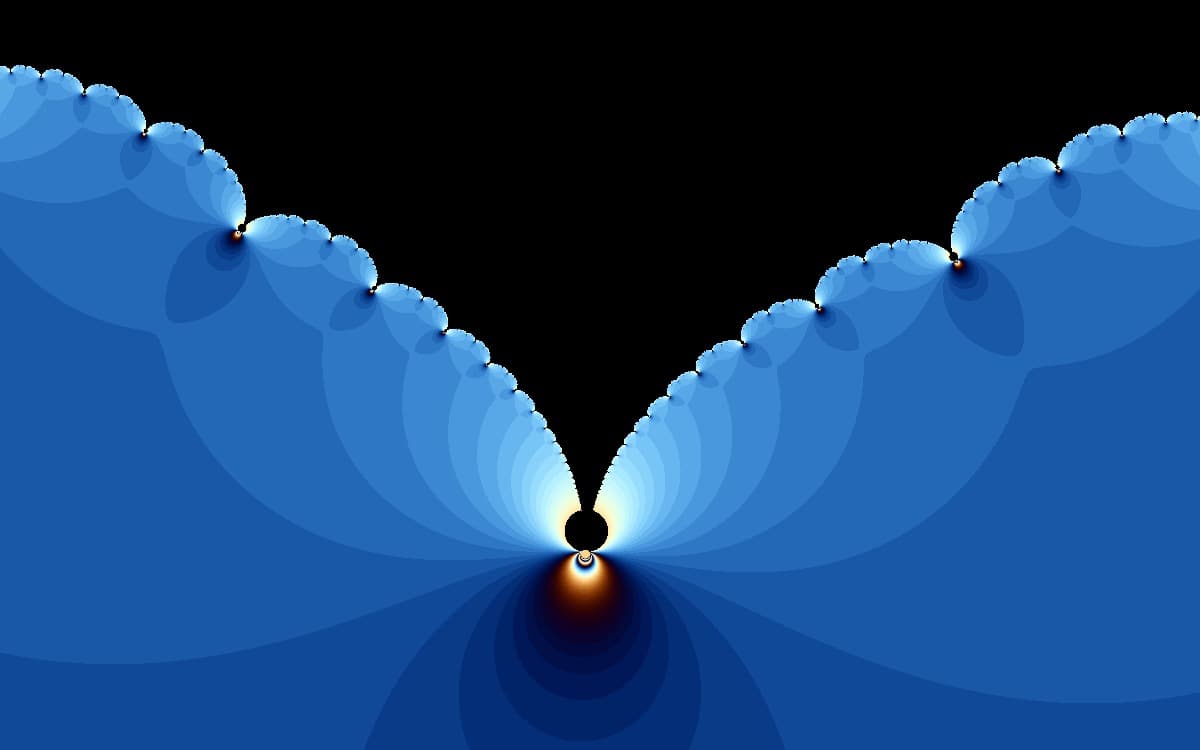
Try the pole at close range. Take c = 0.5, so the pole is at z = −0.5, and start at z₀ = −0.49, just to its right. Then z₁ = (−0.49)² / (−0.49 + 0.5) = 0.2401 / 0.01 = 24.01. One step has thrown the orbit far out. Since |z₁| is large, the next step gives z₂ ≈ z₁² / z₁ = z₁ = 24.01: the large value persists instead of snapping back as in the magnet family. Pixel colour records the steps before the orbit crosses the escape threshold.
Unlike polynomial maps, where infinity always attracts escaping orbits, this map is nearly linear far out (z → z). Thrown-out orbits may drift. The escape-time colours therefore spread into broad, gradual bands rather than the abrupt jumps familiar from z² + c.